Translate to your own language

Become a member of ADDY as me with my link and get $25 to kickstart your own investing journey 🏠

Showing posts with label health. Show all posts

June 12, 2013

This Sexual Problem May Reveal a Weakened Heart

Impotence may signal heart disease.Men with increasingly severe impotence problems are wise to take immediate heart-healthy steps. That is because a new health breakthrough found that impotence is linked to a higher risk of heart disease and even death.
Published in PLOS Medicine, the large-scale study shows that the risk of future cardiovascular disease and death rises as erectile dysfunction (ED) becomes more severe. This is the case even for men with no history of heart problems. This is the first study to show that severity of impotence corresponds to a higher risk of heart disease hospitalization and all-cause mortality.
Australian researchers examined the link between severity of self-reported impotence and those issues in 95,000 men over the age of 45. It included more than 65,000 men without known heart disease, and more than 29,000 men with heart disease.
During two years of follow-up, there were 7,855 hospitalizations for heart disease, and after three years, there were 2,304 deaths. Researchers found that men who did not have heart disease but had severe ED had a relative 35% increased risk of hospitalization and a relative 93% increased risk of all-cause mortality. For men with heart disease and severe ED, the numbers were 64% and 137%, respectively.
The researchers say this is important, as it highlights the need to consider impotence in relation to a wide range of heart problems. They stressed that it is unlikely that ED causes heart disease. Instead, the culprits are conditions such as atherosclerosis (clogged arteries) that are contributing to both.
Most importantly, men who are experiencing significant impotence problems are wise to get some testing to assess their risk for heart disease. Meanwhile, making lifestyle changes to promote heart health is an important step.
based on:
This Sexual Problem May Reveal a Weakened Heart
Banks, E., et al., “Erectile Dysfunction Severity as a Risk Marker for Cardiovascular Disease Hospitalisation and All-Cause Mortality: A Prospective Cohort Study,” PLoS Med. 2013; 10(1): e1001372.

March 12, 2013

New index aims to predict lifespan and cut medical costs

Want to know how long you’ll live? San Francisco researchers developed a new 12-item “mortality index,” which aims to predict how long people older than 50 will live, to help curb costly medical procedures and limit health screenings. The index is based on data of more than 20,000 adults over the age of 50 from 1998 until 2008, from the Health and Retirement Study (HRS), a nationally-representative sample of independently living U.S. adults. Intended for use by doctors, the test estimates which older adults are not expected to live 10 years or more. This could help doctors treating patients less likely to live avoid prescribing harsh medical treatments and cancer screenings. Women less likely to live, for example, may not need cervical cancer screenings, because the cancer would take time to develop and not end up being the cause of death.Described as a “simple checklist,” each item on the index is assigned a point value, with 26 being the overall highest score, or most likely to die. That person would be a man, at least 85-years-old, a smoker, and have a BMI more than 25, among other things. You can check the index here in pdf format: The index


February 07, 2013

The Scary New Butt Beauty Trend (Anal bleaching)


Wadley 


One of the most genius moments in Bridesmaids was when Kristin Wiig’s character very creatively disses fellow bridesmaid, uptight Helen, by accusing her of getting anal bleaching, insinuating that paying for a perfectly white bunghole was a sign of being prissy and just plain ridiculous. Then Maya Rudolph’s character Lillian turns that diss back around and said that yep, Helen had bleached her bum and she knew that because they’d gone together and they love their new, spotless anuses.
Well, it turns out Helen and Lillian aren’t alone in their decision to lighten up their rears; it’s a growing trend. But MDs say it’s not as simple and risk-free as spas make it sound. Read on to find out the deal with painting your backdoor white.
What Is Anal Bleaching Anyway?
It’s exactly what it sounds like and what is sounds like is frankly some sort of torture technique. An acid is applied to your freshly waxed anus and rubbed in, according to the spas we contacted that provide the service. Most places offer the initial application at the spa for about $100-150, then sell you a set of the bleaching lotion or gel to use at home. The whole in-spa process takes about 20 minutes, one Sacramento technician told us. Depending on how dark your skin is, you may need to reapply a number of times to see results. One Los Angeles spa even said that for some people they recommend applying it twice a week for up to eight weeks. And almost all of the spas we called were quick to let us know that customers could also opt for a package that includes both anal bleaching and vulva lightening, in which the bleach is applied to the opening of the vagina.
A Trend, Inspired by Stars
Porn stars, that is. There’s a widely believed rumor that a very famous former adult film star turned TV actress, who shall remain unnamed, got a full front-to-back wax one day and, upon seeing her totally bare nethers, asked the waxer if there was anything she could do to get rid of her anus’s dark hue. And so, anal bleaching was invented—though it was really only done by porn stars at first.
As Brazilians grew in popularity, more and more women began noticing that their anuses were darker than the rest of their skin. (This is totally common and normal, by the way, explains women’s health expert, Jennifer Wider, MD.) An employee at one Colorado spa said, “[Our technicians] do a lot of Brazilian waxes and sometimes the clients are surprised to see dark skin underneath. They are more self-conscious about the skin discoloration, so they want [it] lightened.”
In addition, porn became more ubiquitous, meaning more men and women were, well, exposed to bleached rear entrances, giving some of them a new idea of what a beautiful bum should look like. Add that to the fact that, according to information from the Center for Disease Control, anal sex is on the rise among women, and it’s no surprise that females were suddenly concerned with what they looked like from behind. Now, spas offering the bleaching say the product sells so quickly, they can hardly keep it on shelves. And many of the technicians affirmed they’ve noticed a definite spike in appointments booked in the past few years.

read the whole article here: http://www.cosmopolitan.com/advice/health/anal-bleaching-trend

December 14, 2012

Light therapy cuts post-surgery infections

Vancouver General is the first hospital in the world to adopt a new light-activated disinfection method that is expected to reduce infections in surgical incisions by 39 per cent and save almost $2 million a year.
There are no needles or antibiotics with a host of side effects involved; just a quick pulse of light up a patient’s nose before surgery. It is quick and painless, said Dr. Elizabeth Bryce, director for infection control at the Vancouver Coastal Health Authority.
“We apply a methylene blue dye on a little swab into the front of their noses ... and shine red light — that might feel a little bit warm, but that’s about all — into their noses for two pulses of two minutes each. And then they’re good to go,” Bryce explained.
The technique, developed by a Vancouver company, is effective because most of the bacteria that cause surgical site infections come from on or within the patient’s body, Bryce explained.
“During the course of an operation, organisms migrate and they also float through the air and they land in our wounds,” she said. “So if you could decrease the amount of bacteria on somebody’s body, then you can reduce the risk of having an infection after the surgery.”
The dye contains a substance designed to latch onto the targeted bacteria and then absorb much of the energy from the laser-generated light. It is that energy that kills the bacteria.
The technique, known as photo-disinfection, reduced the number of surgical site infections to 50 from 85, when combined with the use of antibacterial body wipes, during a pilot project at the hospital over the past year. The trial of 5,000 patients, funded by the VGH and UBC Hospital Foundation, reduced average readmissions for surgical site infections to 1.25 cases a month from four and shortened hospital stays for surgical patients. This allowed doctors to perform 138 additional surgeries.
The warm, moist, dark and humid environment inside the nose is a particularly inviting place for bacteria, Bryce said. It’s also home to a strain known as staphylococcus aureus, carried by about a quarter of the population, that can cause “quite devastating” infections if it gets into surgical wounds, she added.
“If we are a staph aureus carrier, we do have a higher risk of getting a surgical site infection. So there’s the bacteria on our body and the bacteria in our nose, of which a real culprit can be staph aureus.”
It will cost about $500,000 a year to run the program at VGH, which is expected to do 7,000 surgeries next year, Bryce said. That cost will be more than offset by the savings from fewer infections, which amounted to $1.9 million during the pilot project, she added.
The photo-disinfection technology was developed by Ondine Biomedical, which specializes in developing alternatives to antibiotics. A similar procedure is already being used by some dentists.
Because the technology is easy to use and to incorporate into the pre-operative areas of hospitals, Bryce said it is something she can see being rolled out across the health region and even used to treat other kinds of infections, such as urinary tract or ventilator-associated pneumonia.
“In this day and age of increasing resistance to antibiotics, it offers (the possibility) that we might have an alternative treatment.”

December 12, 2012

Study debunks moon-mental health link


A team of doctors and psychologists logged hundreds of hospital visits and compared them with phases of the moon.
The researchers found that while diminishing daylight can send people into a funk, moonlight is a non-factor.
Their article, published in a recent edition of General Hospital Psychiatry, summarizes an analysis of 771 patients who suffered from anxiety, panic attacks, mood disorders or suicidal thoughts.
The patients had visited hospitals in Montreal or Quebec City during various seven-day lunar phases between March 2005 and April 2008.
Except for a lower rate of hospital admission during the last quarter of the lunar month moon for individuals struggling with an anxiety disorder, no significant correlation was observed between other mental health problems and any lunar phase," say researchers, led by a team at the University of Montreal.
Researchers dismiss any connection between anxiety and the moon. If our satellite were having any such effect, the symptoms would be obvious at all times since the moon is always orbiting the earth, they note.
The study corroborated earlier research into the winter blues - that sinking feeling observed among some people who live far from the equator where days are much shorter in the winter.
Researchers noted that hospital visits by people with mental disorders were 37% higher in the spring and 37% less frequent in the fall.
The whole story here:  http://www.torontosun.com/2012/12/11/study-debunks-moon-mental-health-link

December 02, 2012

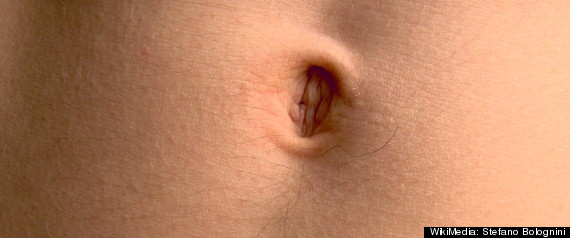
What is in your belly buttons?


Turns out, belly buttons are a jungle of microbial biodiversity: researchers detected over 2300 species! And get this, only eight of those 2300 species– they call them oligarchs – were quite frequent and abundant, present in more than 70% of the individuals sampled.
What is in yours?Check it below.

 http://www.yourwildlife.org/2012/11/welcome-to-the-jungle/
 More and more studies seem to point to the conclusion that diverse skin microbiota helps us defend against pathogens and may forestall some immune dysfunctions (including allergies). 
Network analysis suggests there seem to be at least two basic types of people, according to their belly button bacteria. If bacteria were trees, this is analogous to their being some people with beech forests in their navels and others with maple forests. This much is true, we just can’t say why. The full analysis can be found here: http://www.huffingtonpost.com/2012/11/08/belly-button-bacteria-navel_n_2093501.html

Search This Blog