Bilingual seniors who have spoken two languages since childhood showed their thinking skills were quicker than individuals who only spoke one language. A lifetime of speaking two different languages might be able to help keep the brain sharper in older people, said researchers of the recently completed study.
Included in the study were seniors who were between the ages of 60 and 68 and were listed as being healthy. Two groups were formed in the study. One was made up of people who had been bilingual since their childhood and one was made up of people who were monolingual their entire lives, or who spoke just one language. While participating in different tasks using their brains, the participants were monitored.
Compared to participants who spoke just one language, the bilingual seniors were faster at switching from one task to another when requested. It also took less energy from the frontal area of the bilingual individual’s brain to make each switch.
These new findings suggest that seniors who are bilingual can use their brains more efficiently compared to seniors who have always been monolingual. The lead author said his study’s results suggest that being bilingual for a lifetime might exert its best benefits during aging on the frontal regions of the person’s brain.
Younger adults who were both monolingual as well as bilingual were tested and results found that bilingual individuals at a younger age did not have any advantage over their monolingual counterparts in switching from mental task to mental task and their brain patterns remained equal to those of people who were monolingual.
(June 2015) One study showed that the bilingual patients had been diagnosed about 4 years later
and had reported the onset of symptoms about 5 years later than the
monolingual patients. The groups were equivalent on measures of
cognitive and occupational level, there was no apparent effect of
immigration status, and the monolingual patients had received more
formal education. There were no gender differences.
Showing posts with label share. Show all posts
Showing posts with label share. Show all posts
January 17, 2013


December 02, 2012
What is in your belly buttons?
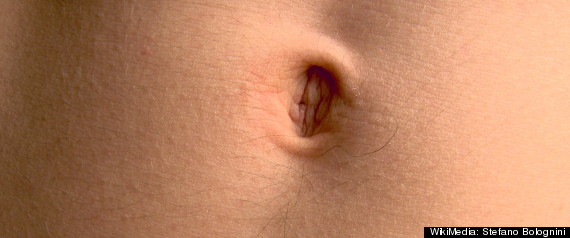
Turns out, belly buttons are a jungle of microbial biodiversity: researchers detected over 2300 species! And get this, only eight of those 2300 species– they call them oligarchs – were quite frequent and abundant, present in more than 70% of the individuals sampled.
What is in yours?Check it below.
http://www.yourwildlife.org/
More and more studies seem to point to the conclusion that diverse skin microbiota helps us defend against pathogens and may forestall some immune dysfunctions (including allergies).
Network analysis suggests there seem to be at least two basic types of people, according to their belly button bacteria. If bacteria were trees, this is analogous to their being some people with beech forests in their navels and others with maple forests. This much is true, we just can’t say why. The full analysis can be found here: http://www.huffingtonpost.com/2012/11/08/belly-button-bacteria-navel_n_2093501.html
Subscribe to:
Posts (Atom)