|
| Tamoxifen |
The breast cancer drug tamoxifen boosts the immune system, and was shown to be effective against Methicillin-resistant Staphylococcus aureus, or MRSA, in lab experiments, according to researchers at the University of California San Diego.
The study's senior author, Professor Victor Nizet, said: 'The threat of multidrug - resistant bacterial pathogens is growing, yet the pipeline of new antibiotics is drying up.
'We need to open the medicine cabinet and take a closer look at the potential infection-fighting properties of other drugs that we already know are safe for patients.
For patients with estrogen-receptor positive breast cancer ( or ER+), tamoxifen blocks the receptors, helping make other treatments such as chemotherapy and radiation more effective. Researchers focused, however, on the drug's 'off-target effect' on the production of a type fatty molecule called ceramide that enhances the ability of white blood cells called neutrophils to engulf and defeat bacteria.
In the lab, researchers found that neutrophils treated with tamoxifen produced three times more neutrophil extracellular traps, or NETs, a group of proteins, enzymes and peptides neutrophils use to kill bacteria.
The researchers treated mice with tamoxifen to test its ability to boost the immune system. After exposing the rodents to MRSA, another dosage of tamoxifen was given and the mice were monitored for five days. Although none of the control mice live more than a day, about 35 percent of the mice treated with tamoxifen survived for five days. Five times fewer MRSA were found in peritoneal fluid taken from the mice's abdomens.
However, the researchers said that while tamoxifen was effective against MRSA in this study, the outcome may vary with other bacteria.
Several bacterial species have evolved methods for evading NET capture, they said.
Second, in the absence of infection, too many NETs could be harmful.
Some studies have linked excessive NET production to inflammatory disease, such as vasculitis and bronchial asthma, they added.
But lets not forget about some of Tamoxifen rather nasty side-effects. Preventing MRSA from spreading in hospitals in a first place is where the fight again it should be focused on.
Please check out another great posting on this blog about MRSA here : Measles and 6 Other Nasty Diseases You Should Worry About Catching While Traveling
Caesarean section births may put babies at higher risk for lifelong health problems by
altering the amount of “good” bacteria in an infant’s gut, Canadian
researchers are reporting.
Appearing this week in Canada’s top
medical journal, the finding could explain why babies delivered via
C-sections are at increased risk of asthma, obesity, inflammatory bowel
disease, cancer, diabetes and other illnesses.
The study is based
on sophisticated DNA testing of 24 babies born in Winnipeg. After
analyzing the babies’ fecal samples, researchers found that infants born
by C-section lacked a specific group of bacteria found in babies
delivered vaginally.
Babies that were exclusively formula fed also had significant differences in their gut bacteria compared with breastfed babies.
“The infant gut microbiota plays a crucial role in lifelong health,” the researchers write in the Canadian Medical Association Journal Among other things, bacteria prime a baby’s immune system, providing protection against disease-causing organisms.
“We want parents (and physicians) to realize that their decisions regarding C-section and breastfeeding can impact their infant’s gut
microbiome and this can have potentially lifelong effects on the child’s
health,” first author Meghan Azad, of the University of Alberta, said in a statement released with the study.
In
Canada, nearly 27 per cent of all babies are delivered via C-section.
Doctors say most surgical births are performed for medically valid
reasons. But there are concerns too many C-sections are being ordered
because labour isn’t progressing quickly enough, and that to many
“routine” but unnecessary interventions are now being done that increase
the odds of a woman needing a surgical delivery.
Babies, like all
mammals, “are naturally inoculated as they pass through the birth
canal,” researchers from the University of Colorado and New York
University School of Medicine write in a related commentary.
Yet
C-sections are rising globally. In the U.S., more than 30 per cent of
babies are now born by caesarean. In China and Brazil, nearly half of
babies are born by C-section.
“The human body harbours trillions of microbes, known collectively as
the ‘human microbiome,’ ” the Canadian team writes in the CMAJ.
“Some
people call it the forgotten organ, because it protects us from
pathogens and also helps in the absorption of nutrients,” said Dr. Anita
Kozyrskyj, research chair and associate professor of the University of
Alberta.
“Increasingly we’re learning that these good bacteria are
quite important to the development of the immune system in the infant,”
she said. “They train the immune cells not to overreact.”
The gut
microbiome is laid down or developed during the first year of life
after birth. “We start off with almost a clean slate,” Kozyrskyj said.
“During (vaginal) delivery, babies acquire mum’s microbes from her
vagina and her GI (gastrointestinal) tract.”
Using DNA sequencing
technology, the team found that C-section babies had undetectable
amounts of Bacteroides, an important gut bacteria involved in priming
the immune system.
Compared with breastfed babies, formula-fed infants had higher
amounts of C. difficile, which has been linked to allergies and asthma
later in life.
The study was based on only a small number of
babies (the researchers are now testing 200 more infants). It’s also not
clear exactly what makes up the “ideal” infant gut microbiome.
However,
“There’s certainly lots of evidence to promote breastfeeding and
vaginal delivery,” said Kozyrskyj. Much of the focus on the rising
number of C-sections has been on the risks to the mother, she said, but
not babies.
“This evidence provides information on the harmful effects of caesarean section delivery on the infant.”
Vancouver General is the first hospital in the world to
adopt a new light-activated disinfection method that is expected to
reduce infections in surgical incisions by 39 per cent and save almost
$2 million a year.
There are no needles or antibiotics with a host
of side effects involved; just a quick pulse of light up a patient’s
nose before surgery. It is quick and painless, said Dr. Elizabeth Bryce,
director for infection control at the Vancouver Coastal Health
Authority.
“We apply a methylene blue dye on a little swab into
the front of their noses ... and shine red light — that might feel a
little bit warm, but that’s about all — into their noses for two pulses
of two minutes each. And then they’re good to go,” Bryce explained.
The
technique, developed by a Vancouver company, is effective because most
of the bacteria that cause surgical site infections come from on or
within the patient’s body, Bryce explained.
“During the course of
an operation, organisms migrate and they also float through the air and
they land in our wounds,” she said. “So if you could decrease the amount
of bacteria on somebody’s body, then you can reduce the risk of having
an infection after the surgery.”
The dye contains a substance
designed to latch onto the targeted bacteria and then absorb much of the
energy from the laser-generated light. It is that energy that kills the
bacteria.
The technique, known as photo-disinfection, reduced the
number of surgical site infections to 50 from 85, when combined with
the use of antibacterial body wipes, during a pilot project at the
hospital over the past year. The trial of 5,000 patients, funded by the
VGH and UBC Hospital Foundation, reduced average readmissions for
surgical site infections to 1.25 cases a month from four and shortened
hospital stays for surgical patients. This allowed doctors to perform
138 additional surgeries.
The warm, moist, dark and humid
environment inside the nose is a particularly inviting place for
bacteria, Bryce said. It’s also home to a strain known as staphylococcus
aureus, carried by about a quarter of the population, that can cause
“quite devastating” infections if it gets into surgical wounds, she
added.
“If we are a staph aureus carrier, we do have a higher risk
of getting a surgical site infection. So there’s the bacteria on our
body and the bacteria in our nose, of which a real culprit can be staph
aureus.”
It will cost about $500,000 a year to run the program at
VGH, which is expected to do 7,000 surgeries next year, Bryce said. That
cost will be more than offset by the savings from fewer infections,
which amounted to $1.9 million during the pilot project, she added.
The
photo-disinfection technology was developed by Ondine Biomedical, which
specializes in developing alternatives to antibiotics. A similar
procedure is already being used by some dentists.
Because the
technology is easy to use and to incorporate into the pre-operative
areas of hospitals, Bryce said it is something she can see being rolled
out across the health region and even used to treat other kinds of
infections, such as urinary tract or ventilator-associated pneumonia.
“In
this day and age of increasing resistance to antibiotics, it offers
(the possibility) that we might have an alternative treatment.”
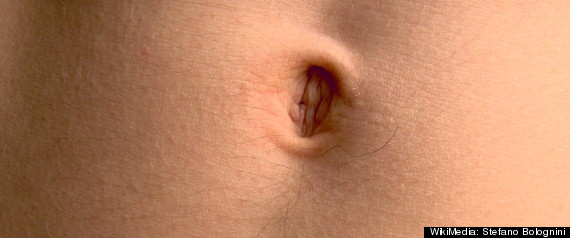
Turns out, belly buttons are a jungle of
microbial biodiversity: researchers detected over 2300 species! And get
this, only eight of those 2300 species– they call them oligarchs – were
quite frequent and abundant, present in more than 70% of the individuals
sampled.
What is in yours?Check it below.
http://www.yourwildlife.org/2012/11/welcome-to-the-jungle/
More and more studies seem to point to the conclusion that diverse skin microbiota helps us defend against pathogens and may forestall some immune dysfunctions (including allergies).
Network analysis suggests there seem to be at least two basic types of people, according to their belly button bacteria. If bacteria were trees, this is analogous to their being some people with beech forests in their navels and others with maple forests. This much is true, we just can’t say why. The full analysis can be found here: http://www.huffingtonpost.com/2012/11/08/belly-button-bacteria-navel_n_2093501.html